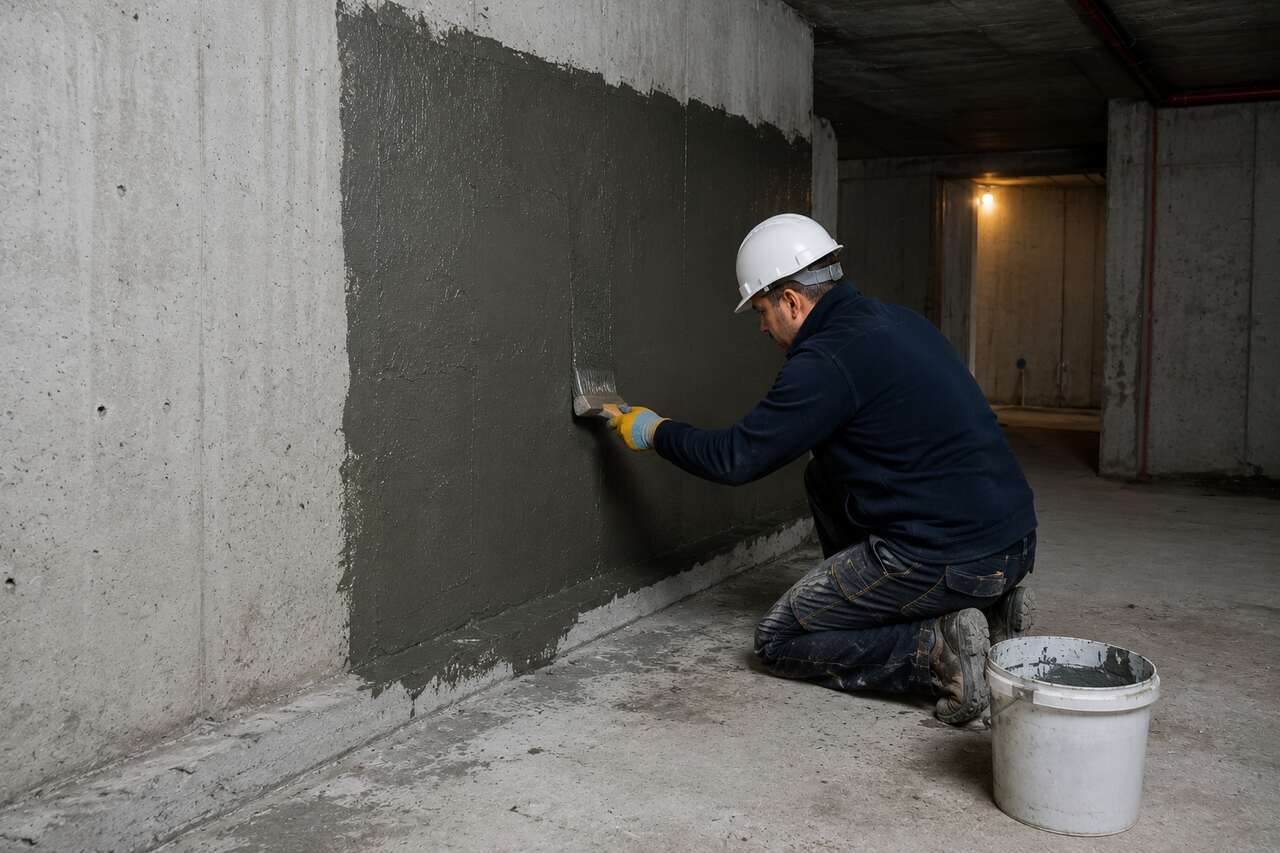

Negative side waterproofing is a method applied to the interior surface of a structure, opposite the direction of incoming water pressure, to control water infiltration and reduce moisture-related damage. It is commonly used in basements, foundation walls, elevator pits, underground parking garages, and existing structures where exterior waterproofing is difficult or impossible. Crystalline waterproofing products, cement-based mortars, plugging mortars, and injection systems are frequently used. Proper surface preparation, crack repair, material selection, and curing are essential for effective and long-lasting negative side waterproofing.
What Is Negative Side Waterproofing?
In waterproofing, the terms "positive" and "negative" describe the relationship between the direction water travels from and the surface on which the application is carried out. Waterproofing applied directly on the surface exposed to water pressure - the side water first comes into contact with - is called positive side waterproofing. Applications carried out on the opposite side of the surface, the side not exposed to water pressure, are known as negative side waterproofing.
Negative side waterproofing, one of the waterproofing methods used in construction, is applied not on the surface where water arrives, but on the opposite face of the structural element. The purpose of this method is to control water advancing from structural elements toward interior spaces, reduce water infiltration, and prevent structural damage that water can cause.
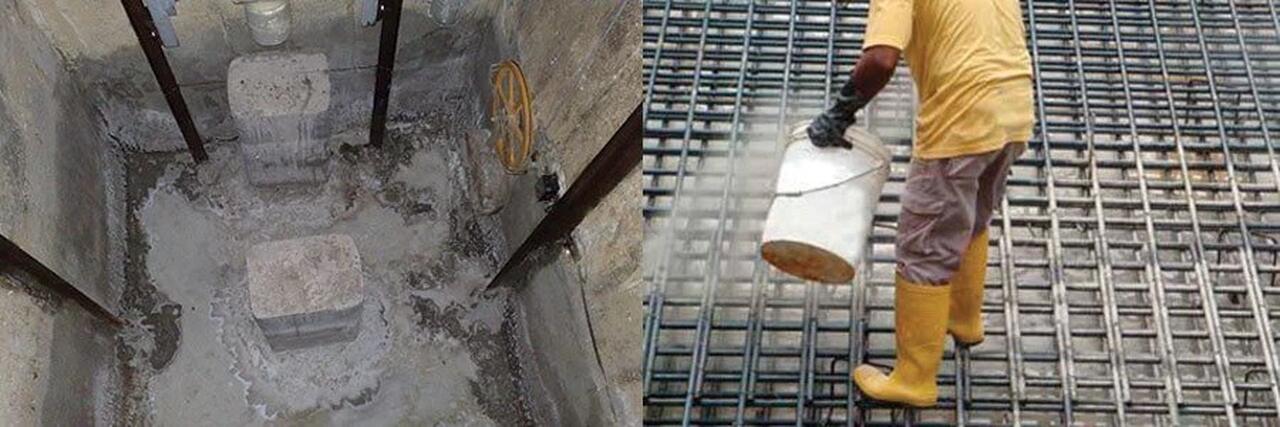
Negative side waterproofing is typically used in interior areas continuously exposed to moisture and water pressure, such as basements, foundation retaining walls, elevator pits, underground parking garages, and retaining walls. One of the materials used in negative side waterproofing applied from the interior, without requiring access to the exterior surface, is crystalline waterproofing.
As Baumerk, Construction Chemicals Specialist, we've compiled what you need to know about negative side waterproofing and the materials used in it.
What Does Negative Side Waterproofing Do?
Negative side waterproofing applied from the interior is the safest waterproofing option available when exterior waterproofing hasn't been carried out. Interior waterproofing can be applied in areas requiring waterproofing, particularly damp basements, retaining walls, and elevator pits. The main functions of negative side waterproofing are as follows:
- Brings water infiltration under control.
- Reduces moisture problems that can occur in basements and below-grade spaces.
- Slows the deterioration of concrete surfaces caused by water exposure.
- Lowers the risk of reinforcement corrosion.
- Limits the formation of mold, mildew, and unpleasant odors.
- Contributes to preserving building usability comfort and extending service life.
Negative side waterproofing is considered an alternative protection method, particularly for structures where excavation on the exterior side is impossible or requires high cost. The factor that makes this waterproofing effective is the materials used.
What Are Negative Side Waterproofing Materials?
Most materials used in negative side waterproofing consist of cement- and mortar-based products. The main reason for this is that these products provide high adhesion to concrete surfaces and can bond with concrete's porous structure even when applied from the opposite face rather than the side water arrives from.
Mortar-based systems can also resist negative water pressure, preventing water from passing through walls or foundation elements into interior spaces. The most commonly used materials in applications are as follows:
Crystalline Waterproofing Mortars and Products
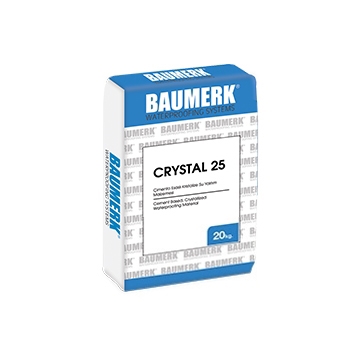
In negative side waterproofing, crystalline waterproofing mortars penetrate the pores of concrete and form a crystalline structure. This mortar application helps prevent water from advancing through capillary voids. For example, among concrete and mortar admixture materials that affect concrete's water impermeability, Baumerk CRYSTAL 25 is an effective material that protects reinforced concrete elements and renders them watertight, and is suitable for negative side waterproofing applications.
You can review our article "What Is Crystalline Waterproofing, What Are Its Benefits?" for general information and further details on crystalline waterproofing.
Cement-Based Waterproofing Mortars
With special formulations capable of resisting negative water pressure, these are commonly used in basement and retaining wall applications.
Plugging Mortars
Preferred for quickly stopping active water leaks. Particularly effective for intense water ingress from localized points.
Injection Systems
Polyurethane- or acrylic-based injection materials can be used to eliminate water infiltration from cracks and joints.
Where Is Negative Side Waterproofing Applied?
Negative side waterproofing is a method used in areas where access to the surface water arrives from is difficult or impossible. Common application areas include:
- Basement walls
- Foundation retaining wall concrete
- Elevator pits
- Underground parking garages
- Shelters
- Tunnels
- Water tanks
- Retaining walls
- Old and existing structures
Negative side waterproofing is a safe and solution-oriented application especially in areas where exterior excavation cannot be carried out due to the presence of neighboring structures.
How Is Negative Side Waterproofing Done?
In negative side waterproofing applications, correct material selection is as important as surface preparation and application detail. While the application process may vary depending on the structure's current condition and the water pressure it's exposed to, it generally consists of the following stages:
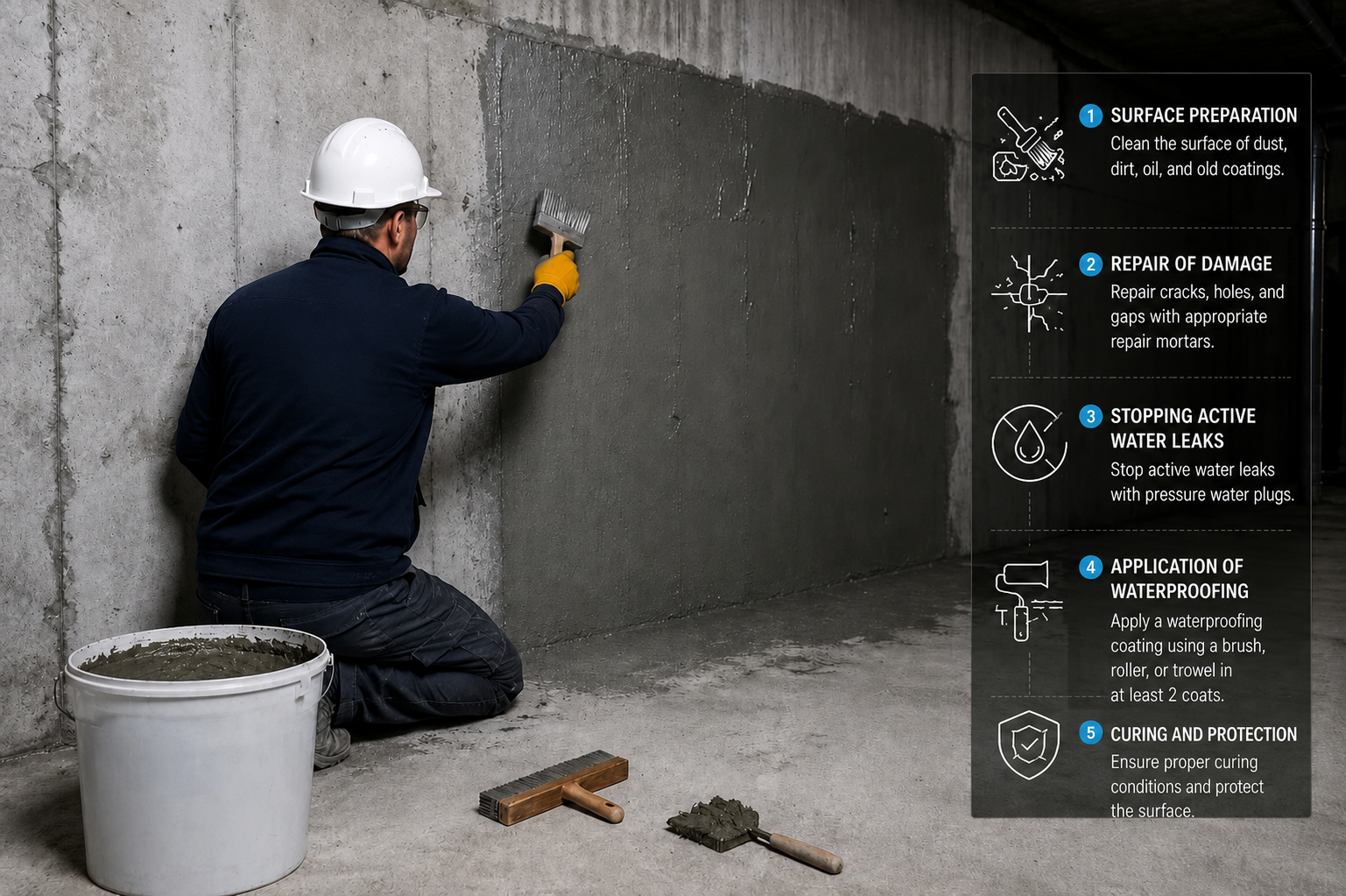
1. Surface Preparation
One of the essential stages of waterproofing is preparing the surface for the application. First, loose particles, paint residue, grease, dirt, and other elements that could reduce adhesion are removed from the concrete surface.
Particularly in older structures, exposing the concrete surface and making the porous structure visible is important. Grinding equipment, mechanical scraping methods, or high-pressure water applications can be used for surface preparation at this stage.
2. Repairing Damage and Cracks
After surface preparation, all weak points where water could advance are identified. Segregation zones, cold joints, tie-rod holes, concrete voids, and cracks are repaired with suitable repair mortars. Repair mortars used for repair and reinforcement purposes can be found in Baumerk's extensive product portfolio under Repair and Reinforcement Systems.
High-adhesion, non-shrink repair mortars are preferred at this stage. If moving cracks are involved, polyurethane or epoxy injection systems can also be used. The goal is to eliminate the pathways water could travel through prior to application.
3. Stopping Active Water Leaks
If there is pressurized or continuous water ingress from the surface, these leaks must first be brought under control. Otherwise, the waterproofing layers applied afterward may not perform adequately. At this stage, fast-setting plugging mortars that can achieve initial set within minutes are generally used.
Plugging mortars are applied at the point of active water ingress to help stop the water temporarily or permanently. For water leaks from dense cracks, polyurethane- or acrylate-based injection systems can be used.
4. Reinforcing Corners and Junction Points
Wall-to-floor junctions, cold joints, and corner areas are among the zones where water most frequently advances. For this reason, cove/fillet detailing is applied at these points using cove tape or repair mortars before application. Fillets formed with a radius of approximately 3–5 cm ensure the waterproofing layer continues without interruption at corner areas, improving performance.
5. Applying the Waterproofing Layer
The selected negative side waterproofing product is applied to the surface in accordance with manufacturer instructions. Multiple coats can be applied when necessary. After surface preparation is complete, waterproofing materials resistant to negative water pressure are applied. The main products used at this stage include:
- Crystalline waterproofing mortars,
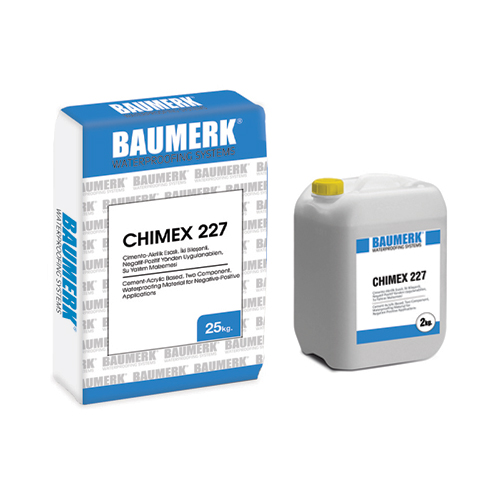
- Cement-based negative side waterproofing mortars and systems (for example, Baumerk CHIMEX 227 is a cement-acrylic based, high-performance capillary-active material that can be applied from both the negative and positive side),
- Osmotic crystal-technology products,
- Mineral-based waterproofing coatings.
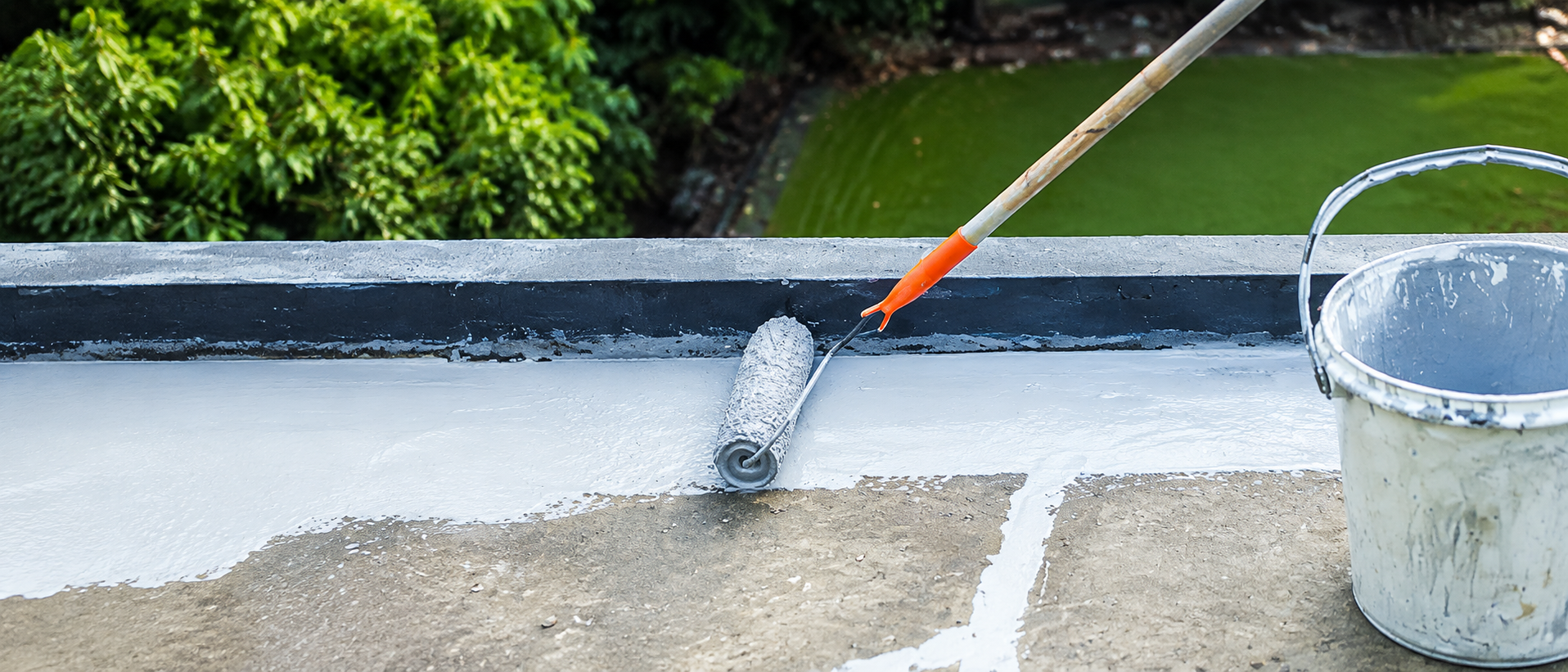
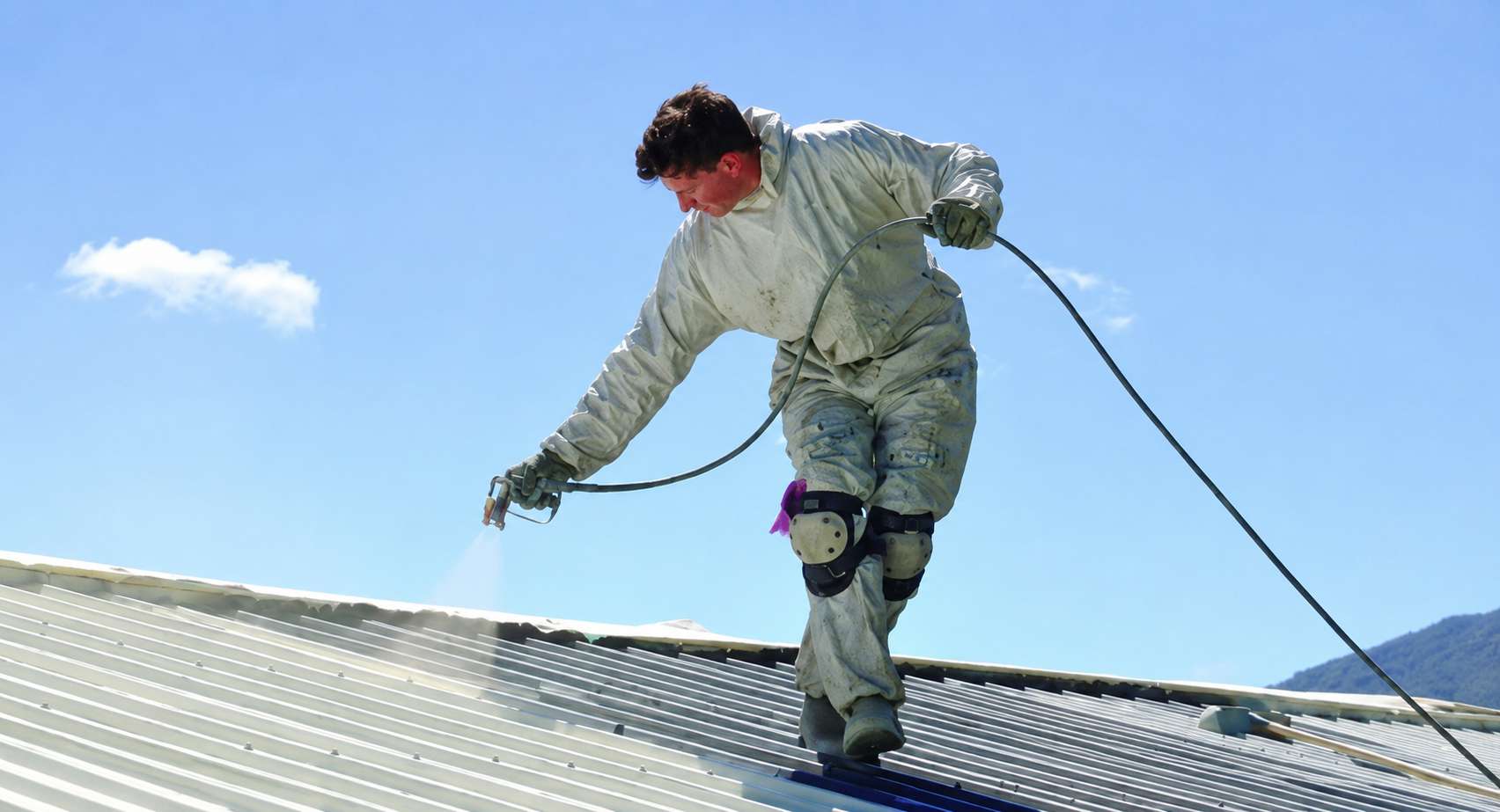
These products are applied by brush, trowel, or spray. Depending on manufacturer recommendation, generally two or more coats are applied. Attention to waiting times between coats is important.
6. Curing and Protection Process
After application, appropriate curing conditions specified in the product's technical data sheet are provided. Particularly in cement-based systems, rapid drying or extreme temperature fluctuations can negatively affect performance. Following the curing process, the surface is inspected, any weak points are identified, and additional applications are carried out in areas deemed necessary. In structures with high water pressure, application performance can be verified with a water test if required.
What Are the Advantages of Negative Side Waterproofing?
The main benefit of negative side waterproofing is that it allows waterproofing to be carried out in application areas that lie beneath water level. While waterproofing on the side water arrives from - that is, positive side waterproofing - is generally recommended, negative side waterproofing stands out as a reliable and widely used alternative solution for bringing water infiltration under control in existing structures where access to the exterior facade isn't possible.
Doesn't Require Access to the Surface Water Arrives From: The most important advantage of negative side waterproofing is that the application can be carried out from inside the structure. In foundation retaining walls, basements, or underground structures, application can be performed without the need for excavation to reach the exterior facade.
Can Reduce Excavation and Labor Costs: Exterior excavation work, particularly in existing structures, can create a significant burden in terms of both time and cost. Systems applied from the negative side can offer more economical solutions by reducing the need for such additional operations.
An Effective Repair Method for Existing Structures: Water leaks often emerge while a building is in use. Negative side waterproofing allows existing structures to be repaired without requiring large-scale renovations. For this reason, it's frequently preferred in renovation and strengthening projects.
Helps Bring Active Water Leaks Under Control: When used together with plugging mortars, injection systems, and crystalline waterproofing products, it can help stop active water ingress. This is particularly valuable for improving usability comfort in basements and underground spaces.
Can Be Applied Without Interrupting Building Use: A negative side waterproofing application doesn't require the building to be completely vacated. This means residential buildings, commercial structures, or industrial facilities can largely continue operations while waterproofing work is carried out.
Contributes to Protecting Reinforced Concrete Elements: Reinforced concrete structures continuously exposed to moisture can eventually develop reinforcement corrosion, concrete cracking, and loss of strength. Negative side waterproofing limits water penetration into interior spaces while contributing to the longer-term protection of structural elements.
Helps Reduce Moisture and Mold Formation: Moisture problems seen in basements and below-grade spaces can negatively affect not only structural health but also indoor air quality. Negative side waterproofing helps reduce moisture-related mold, mildew, and odor formation.
Can Enable Reuse of Previously Unusable Spaces: Storage rooms, archives, parking garages, or technical spaces that couldn't be used due to water leaks can become usable again following a suitable negative side waterproofing application. This is one of the notable advantages that increases the functional value of existing structures.
What Are the Disadvantages of Negative Side Waterproofing?
While negative side waterproofing is effective in many situations, it also has certain limitations. These can be listed as follows:
- It doesn't completely prevent water from reaching the structural element; it only controls its passage to the interior side.
- The structural element may continue to be exposed to water pressure.
- Compared to positive side waterproofing, the level of protection may be lower in some cases.
- Leak sources must be correctly identified before application.
- In structures with severe and continuous water pressure, additional waterproofing solutions may be needed.
Due to the factors above, positive side waterproofing - applied on the side water arrives from - is prioritized whenever possible. That said, in structures where intervention from the exterior isn't possible, negative side waterproofing is an effective and widely used method for bringing water leaks under control.
We've outlined all the details of negative side waterproofing applied from within a structure. You can visit our blog page for more information on waterproofing and construction chemicals, or check out our Construction Chemicals page for material needs.