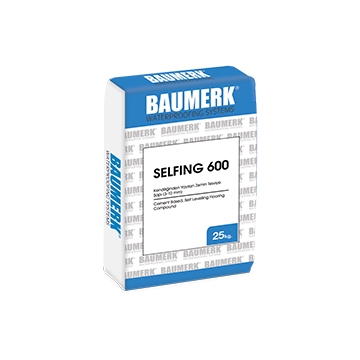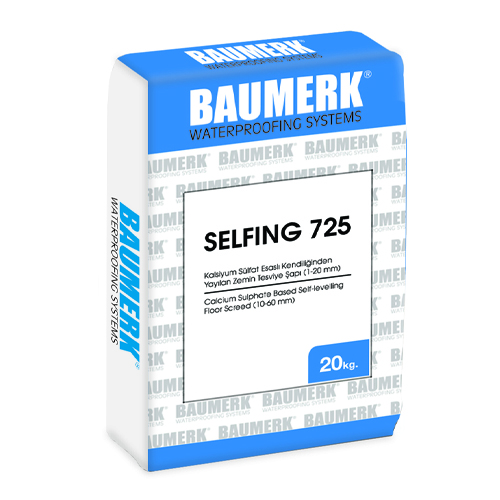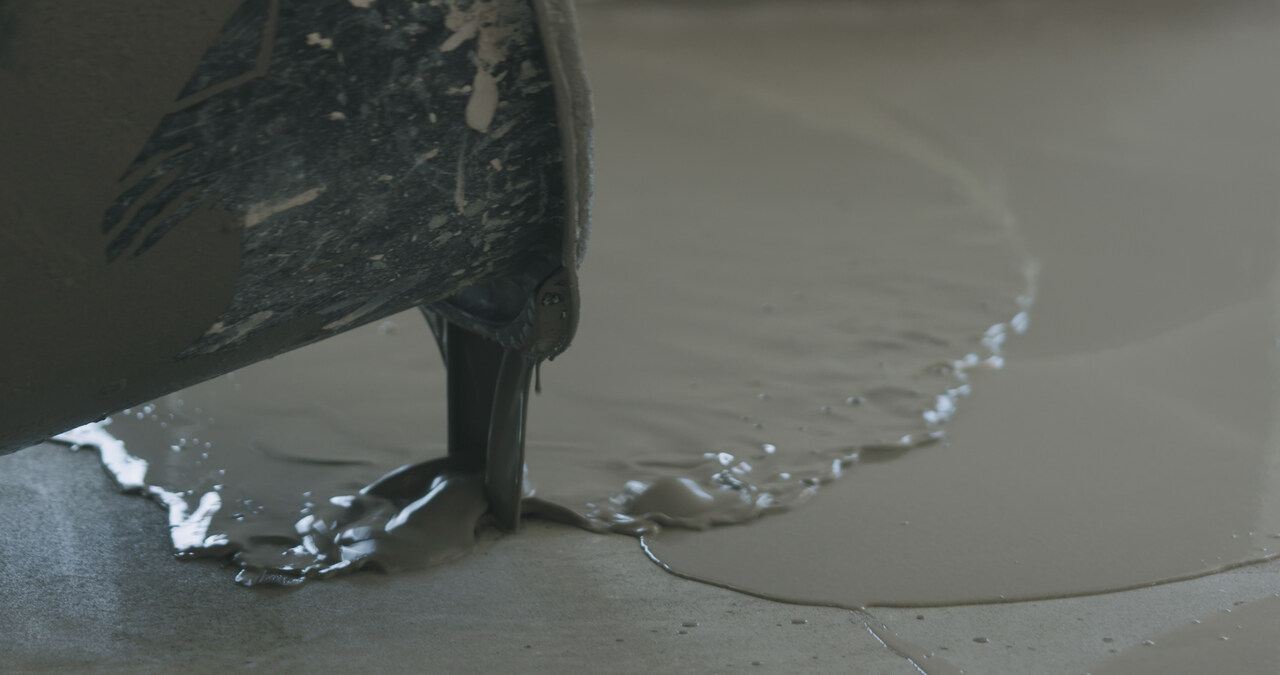

Self-leveling screed is a special cement-based (or gypsum-based) floor leveling compound that spreads across a surface on its own. Once poured, its fluid consistency allows it to flow and settle naturally, automatically bringing the substrate to a smooth, flat surface. By shortening application time, self-leveling screed reduces labor costs and provides a smooth base for finish flooring materials. It also creates a reliable foundation for the safe installation of various floor coverings such as parquet, ceramic tile, or epoxy.
As construction chemicals specialists, Baumerk has answered the most frequently asked questions about self-leveling screed application.
Properties of Self-Leveling Screed
Self-leveling screed is a high-strength, self-spreading floor leveling mortar based on specially polymer-modified cement or gypsum. With its fine, homogeneous structure, this material gives the applied surface a smooth, even finish. The main properties of self-leveling screed are as follows:
- Its fluid consistency allows it to spread easily across the surface, ensuring even leveling.
- It can be applied quickly, reducing labor time.
- It offers high resistance to compression and abrasion.
- It creates an ideal substrate for coverings such as parquet, ceramic, PVC, carpet, and epoxy.
- It minimizes the formation of voids and undulations on the surface.
- It performs well even at thin application thicknesses.
- Its fast-curing nature after application allows finishing work to begin quickly.
- It provides strong adhesion to the substrate, helping finish materials bond more securely.
Where Is Self-Leveling Screed Used?
The primary use of self-leveling screed is in interior spaces, where it is used for floor leveling and repair. It can be safely applied before PVC, carpet, and parquet flooring installations, underfloor heating systems, waterproofing, and epoxy applications. Its functions in these areas include:
- PVC flooring: Levels the substrate before PVC installation, ensuring the covering is applied smoothly and creating a long-lasting base.
- Carpet flooring: Flattens the surface before carpet installation and prevents voids from forming, increasing the durability of the substrate and extending the life of the covering.
- Parquet flooring: Creates a smooth, solid base suitable for parquet installation, correcting surface irregularities and simplifying the assembly process.
- Underfloor heating systems: Levels the floor before heating systems are installed and optimizes heat distribution, improving the efficiency and performance of the underfloor heating system.
- Leveling and repair before waterproofing: Smooths the surface and repairs cracks before waterproofing applications, increasing the effectiveness of the waterproofing material.
- Leveling and repair before epoxy application: Levels the surface before epoxy coating and ensures a smooth finish, contributing to a longer-lasting, trouble-free coating.
How Many Days Does Self-Leveling Screed Take to Dry?
Self-leveling screed spreads quickly across the application area and dries in a short time. A standard screed can typically take several weeks to fully dry and become ready for a finish coating. Self-leveling screed, however, hardens much faster and, in most applications, can bear foot traffic within a few hours. It generally dries fully within 48 hours.
How Is Self-Leveling Screed Applied?
The concrete surface to be treated must be clean, dry, and structurally sound. Any paint, plaster residue, oil, or similar contaminants on the surface must be completely removed. The floor should be swept free of dust and made ready for application. A clean, sound surface allows the self-leveling screed to bond better with the substrate.
If there are pits, cracks, or voids in the surface, they should be repaired beforehand with an appropriate repair mortar. At this stage, you can use the right repair product from Baumerk's repair and strengthening systems to improve substrate strength.
- About 30 minutes before applying the self-leveling screed, the surface should be primed with a suitable primer. Baumerk floor primers balance surface absorbency and help the leveling mortar achieve stronger adhesion to the substrate.
- For a 25 kg bag of self-leveling floor screed mortar, approximately 5.5–6 liters of clean water should be added.
- The material is mixed with a low-speed mixer until a homogeneous, lump-free consistency is achieved.
- The prepared mortar is poured onto the floor and spread with a notched trowel or steel trowel to fill any surface voids, ensuring even distribution across the entire area.
- After application, a spiked roller or lambskin roller is used to remove any air bubbles that may form on the surface. This step helps achieve a smoother, more even finish.
- The poured self-leveling screed spreads on its own within approximately 15 minutes and levels the floor.
- The applied floor can typically bear foot traffic after about 2 hours. However, sufficient drying time must be allowed before applying any finish coating on top.
To ensure self-leveling screed is applied correctly, always follow the product's usage instructions, and complete surface preparation thoroughly to achieve the desired result. You can also check our blog page for more information on other floor coverings and products applied to concrete substrates.